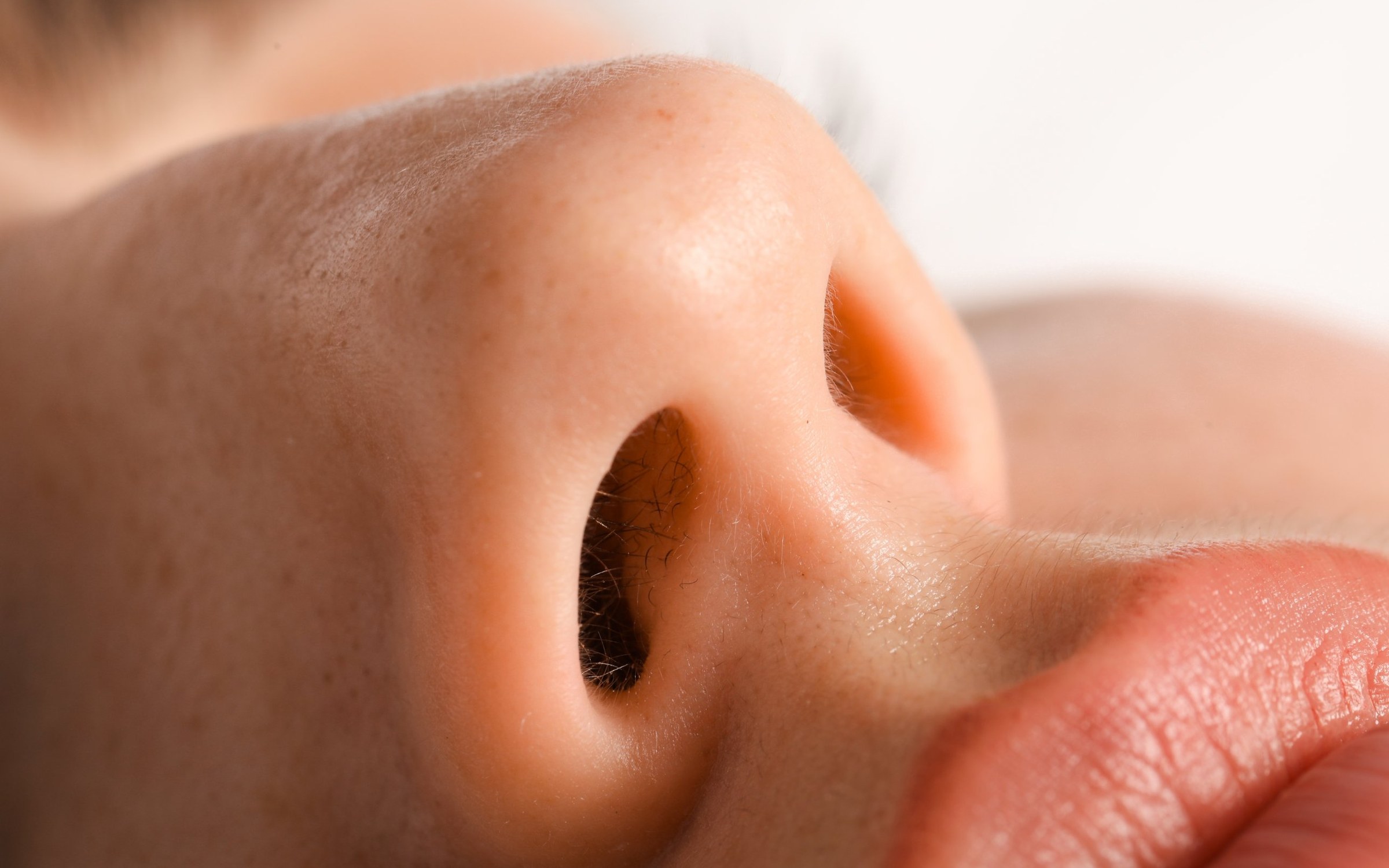

Ultrasonic or traditional rhinoplasty: at a glance
- PrincipleUltrasonic vibrations
- TraditionalRasp and osteotome
- Bruising, swellingReduced in the first week
- PainLess in the first few days
- Operating timeNot longer
- Price€6,000 to €10,000
When a rhinoplasty alters the bones of the nose, two families of instruments are available. The traditional technique uses a rasp to lower the hump and an osteotome, a kind of chisel tapped with a mallet, to cut the bones. Ultrasonic rhinoplasty, or piezosurgery, cuts and sculpts the bone with an instrument that vibrates at a very high frequency, without cutting the mucosa (the lining of the nose) or the nearby blood vessels. Studies show less swelling, bruising and pain in the first week, without lengthening the operation. The final result, however, depends above all on the analysis of the nose and on the surgeon’s technique.
Price of a rhinoplasty: €6,000 to €10,000, on a written quote after consultation (€100).
1. What is done to the nasal bones during a rhinoplasty?
The upper third of the nose is bone; the lower two thirds are cartilage. On the bones, the surgeon may:
- lower a bony hump;
- cut the bones at the sides of the nose (osteotomies), to bring them closer together, narrow a wide nose, close the “open roof” left after the hump is lowered, or straighten a deviated nose;
- reshape the surface of the bone to correct an irregularity.
When the nose only needs work on the tip or a small cartilaginous hump, no work on the bone is needed: the question of which instrument to use does not arise.
2. The traditional technique: rasp and osteotome
The rasp is a file that wears the bone down to lower the hump. The osteotome is a fine chisel that the surgeon taps with a mallet to cut the bone. Osteotomies are often performed through small incisions, without seeing the bone directly: the fracture line is guided by the instrument and partly by the bone itself. These instruments have proven their worth over decades, but they can injure the mucosa and the small vessels nearby, hence bruising and swelling around the eyes.
3. Ultrasonic rhinoplasty (piezosurgery)
The instrument is a small ultrasonic scalpel: its tip vibrates at a very high frequency and cuts bone, a hard, mineralised tissue, without cutting the soft tissues (mucosa, vessels, nerves), which do not vibrate at these frequencies. Several tips make it possible to saw, rasp or sculpt. The surgeon works under direct vision, without a hammer.
This allows clean, stable cuts, placed to the millimetre, and fine reshaping of the bone surface, sometimes without any fracture. At Dr Médard de Chardon’s practice, ultrasound is used whenever work on the bones is needed, combined with preservation rhinoplasty.
With ultrasound: clean cuts under direct vision, mucosa and vessels preserved.
- 1Lateral osteotomy: clean cut, under direct vision (Ultrasound view)
- 2Ultrasonic tip: cuts the bone, spares the mucosa and vessels (Ultrasound view)
- 3Bony hump lowered with a rasp or sculpting tip (Ultrasound view)
- 4Soft tissues preserved: less bruising and swelling in the first week (Ultrasound view)
- 1Lateral osteotomy: fracture partly guided by the bone (Rasp and osteotome view)
- 2Osteotome tapped with a mallet (Rasp and osteotome view)
- 3Bony hump lowered with the rasp (Rasp and osteotome view)
- 4Bruising and swelling around the eyes, more marked in the first week (Rasp and osteotome view)
4. Ultrasound or rasp and osteotome: the comparison
| Ultrasound (piezosurgery) | Rasp and osteotome | |
|---|---|---|
| Instrument | Vibrating tip (saw, rasp, sculptor) | File, and chisel tapped with a mallet |
| Control | Under direct vision, cut precise to the millimetre | Often without seeing the bone; line partly guided by the bone |
| Mucosa and vessels | Spared | May be injured |
| Swelling and bruising | Reduced in the first week | More marked in the first week |
| Pain | Less in the first few days | More marked in the first few days |
| Operating time | No clear difference in recent studies | Reference |
| Exposure of the bones | Wider dissection, often through an open approach | Small incisions possible |
| Long-term result | No proven superiority | Reference |
| Main indications | Bony hump, wide nose, deviated nose, irregular bones, revision rhinoplasty | All rhinoplasties involving work on the bone |
5. What the studies show
Several meta-analyses have compared the two techniques. The most recent, published in 2026, pools 19 randomised trials and 905 patients:
- less swelling on day 2 and day 7;
- less bruising on day 1, day 2 and day 7;
- less pain on day 2;
- injuries to the mucosa almost absent with ultrasound;
- no significant difference in the time taken for the osteotomies.
These results concern the first week. The level of evidence remains moderate, and the advantage fades when compared with traditional osteotomies performed under direct vision. To date, no study shows a better long-term aesthetic result with ultrasound.
6. The limits of ultrasound
- Exposure: to see the bone, the skin and periosteum (the membrane covering the bone) are lifted over a wider area, most often through an open approach.
- Equipment: the device and its tips are expensive, and mastering them takes training.
- Cartilage: ultrasound acts only on bone. The shape of the tip, the septum and the nasal valves, which account for a large part of the result, are always worked on in the cartilage.
- Swelling of the tip: this depends mainly on the skin and on the work on the cartilage; it always lasts several months.
The tool does not replace the analysis of the nose or experience. The risks of a rhinoplasty remain the same (haematoma, infection, imperfection that may justify a touch-up, temporary changes in sensation). Choosing a qualified, experienced and reputable surgeon reduces these risks, and may even eliminate some of them.
7. For which noses is ultrasound useful?
It is useful whenever the bones need to be worked on: a bony hump, a wide nose to be narrowed, a deviated nose, bony irregularities, and above all revision rhinoplasty, where bone that has already been operated on requires great precision. It adds nothing when only the tip is altered, nor for a non-surgical rhinoplasty by injection. Breathing difficulty is treated on the septum, the turbinates or the valves: see functional rhinoplasty.
8. Is the recovery different?
The process is that of any rhinoplasty: an operation of 1.5 to 3 hours, no nasal packing in more than 95% of cases, a nasal splint for 7 to 10 days, and social downtime of about 10 days. Bruising, from 0 to 10 days depending on what is done, is generally more discreet and can be covered with make-up from day 3 or 4. The result is clear at 2 months and final at 1 year, once the swelling of the tip has gone.
Frequently asked questions
Does ultrasonic rhinoplasty prevent bruising?
It reduces bruising without eliminating it. Studies show less bruising and swelling around the eyes in the first week; a bruise is still possible, especially after osteotomies.
Is the result better than with the traditional technique?
Ultrasound makes work on the bone more precise and the recovery gentler. However, no study shows a better long-term aesthetic result: this depends above all on the analysis of the nose and the surgeon’s experience.
Is ultrasonic rhinoplasty more expensive?
At Dr Médard de Chardon’s practice, no: the price of a rhinoplasty ranges from €6,000 to €10,000, on a written quote after a consultation at €100.
Can ultrasound be combined with preservation rhinoplasty?
Yes, they complement each other. Preservation rhinoplasty lowers the hump without removing it and keeps a natural nasal bridge; ultrasound performs the bone cuts it requires with precision.
Is ultrasound useful for revision rhinoplasty?
Yes. In a nose that has already been operated on, the bones may be irregular or poorly positioned: ultrasound allows them to be reshaped or cut again with precision.
Is ultrasonic rhinoplasty less painful?
A little, in the first few days: studies show less pain and less use of painkillers. In any case, rhinoplasty is not very painful; the discomfort comes mainly from the splint and the blocked nose.
References
- Armanfar S, et al. Piezoelectric versus conventional rhinoplasty: a GRADE-assessed systematic review and meta-analysis of randomized controlled trials. Aesthet Surg J. 2026;46(8):891-906. doi:10.1093/asj/sjag082
- Khajuria A, et al. Piezoelectric osteotomy versus conventional osteotomy in rhinoplasty: a systematic review and meta-analysis. Plast Reconstr Surg Glob Open. 2022;10(11):e4673. doi:10.1097/GOX.0000000000004673
- Kim DH, et al. Effect of piezoelectric osteotomy on postoperative oedema and ecchymosis after rhinoplasty. Clin Otolaryngol. 2019;44(6):968-974. doi:10.1111/coa.13415
- Tsikopoulos A, et al. Piezoelectric or conventional osteotomy in rhinoplasty? A systematic review and meta-analysis of clinical outcomes. ORL J Otorhinolaryngol Relat Spec. 2020;82(4):216-234. doi:10.1159/000506707
- Gerbault O, Daniel RK, Kosins AM. The role of piezoelectric instrumentation in rhinoplasty surgery. Aesthet Surg J. 2016;36(1):21-34. doi:10.1093/asj/sjv167