
Chemical peels at a glance
- Session15 min
- AnaesthesiaNone
- Social downtimeNone to 8 days
- Frequency1 to 4 sessions a year
- ResultImmediate to 8 days
- Price€130 to €400
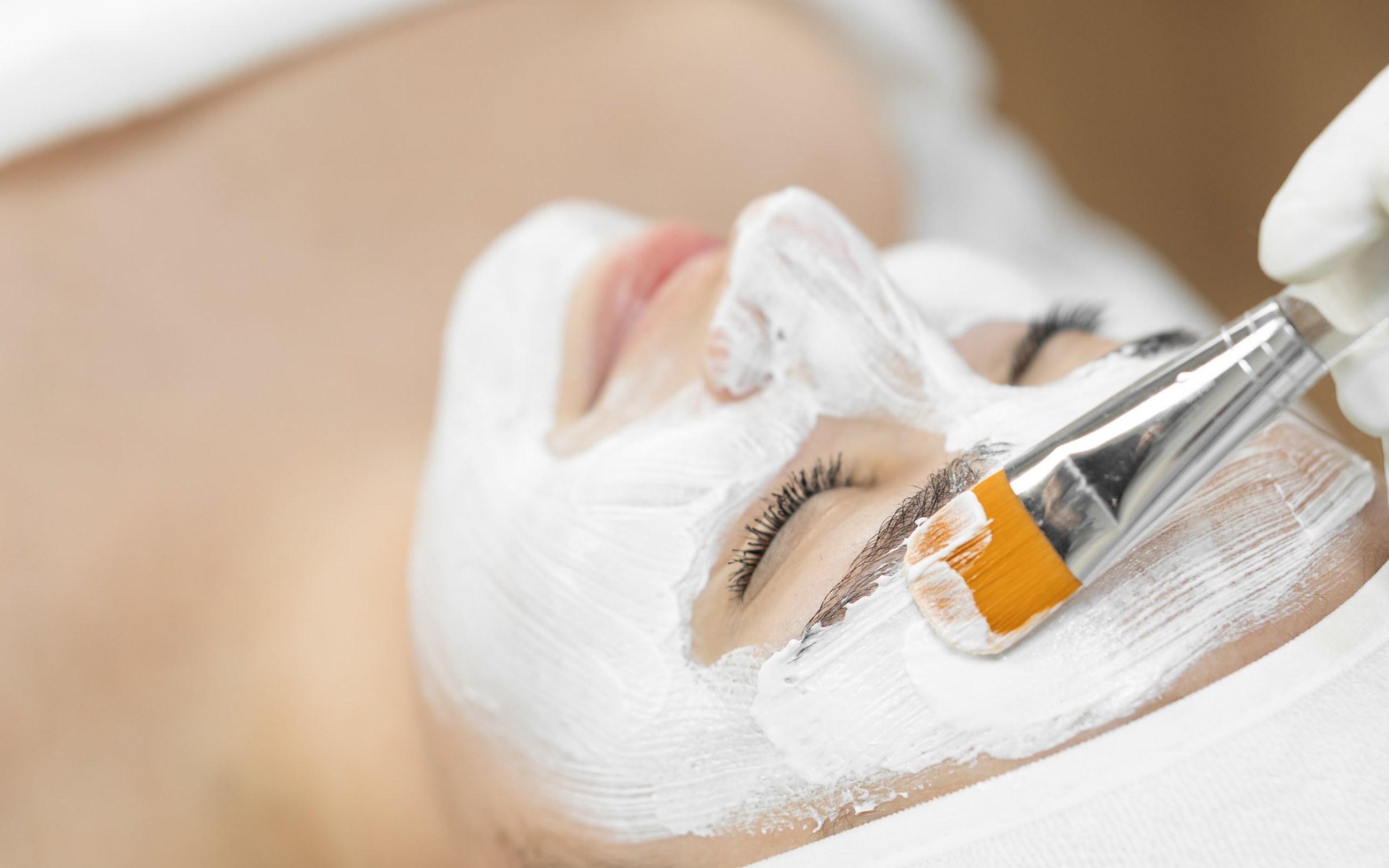
A chemical peel applies a solution to the skin that exfoliates its surface layer; the skin rebuilds itself smoother, clearer and more radiant. The light peel, with fruit acids, maintains radiance or treats acne, with no social downtime. The medium peel, with TCA, fades brown spots and smooths the skin texture, with a week of flaking. The depigmenting peel fades the “mask of pregnancy” (melasma) and certain pigment spots. The session lasts 15 minutes at the Cannes practice, with no anaesthesia.
Price: light peel €130 per session, medium peel €400 per session.
What does a peel correct?
By exfoliating the surface layer of the skin, a peel smooths away certain irregularities: enlarged pores, excess sebum, brown spots, acne, blackheads and very fine lines. It evens out the complexion and makes the skin more radiant.
It does not erase wrinkles: expression lines (forehead, frown lines, crow’s feet) are treated with Botox, and deeper wrinkles with hyaluronic acid fillers.
Peels are chemical “resurfacing” treatments. Other kinds exist, thermal (laser) or mechanical (dermabrasion, now hardly used because it is harsh on the skin), which Dr Médard de Chardon does not offer.
Which peel should you choose?
Peels are classified by depth: superficial (fruit acids), medium (TCA) or deep (phenol); Dr Médard de Chardon does not perform deep peels. The choice is made at the consultation, according to your skin type and the result you want.
Light peel, with fruit acids: it exfoliates the most superficial layer of the epidermis.
Light, medium or depigmenting peel?
| Light peel | Medium peel | Depigmenting peel | |
|---|---|---|---|
| Product | Fruit acids: glycolic, lactic, mandelic, salicylic | Trichloroacetic acid (TCA) | Depigmenting product |
| For | Radiance, complexion, acne, pores | Brown spots, skin texture, dull complexion | Mask of pregnancy (melasma), spots after inflammation |
| Session | 15 minutes | 15 minutes | 15 minutes |
| Social downtime | None | 8 days | No sun exposure afterwards |
| Frequency | 3 to 4 sessions a year | 1 to 2 sessions a year | 1 to 2 sessions, from late September to late May |
| Price | €130 per session | €400 per session | Given at the consultation |
The light fruit-acid peel
Also called a gentle or superficial peel, it uses fruit acids: glycolic, lactic, mandelic or salicylic. The session lasts 15 minutes, with no social downtime (a “lunchtime peel”); it is repeated 3 to 4 times a year.
To prevent ageing
It improves the radiance and elasticity of the skin and evens out the complexion. It does not rejuvenate: it helps you “age well”. It can be combined with a skin booster or mesolift, which hydrate the skin in depth.
For acne
It reduces excess sebum, microcysts, comedones and visible pores, and restores radiance. On its own it is never enough: it complements the underlying treatment prescribed by the dermatologist (isotretinoin, antibiotics of the cycline family, an adapted diet, non-comedogenic sebum-regulating skincare).
The medium TCA peel
It uses trichloroacetic acid (TCA) at different concentrations; a little phenol is sometimes added to strengthen its action. It fades brown spots, fine lines and slightly enlarged pores, brightens the complexion and smooths the skin texture. It does not erase wrinkles.
The session lasts 15 minutes. The skin peels for a week, then looks clearer and more radiant; 1 to 2 sessions a year.
Before: brown spots (pigment in the epidermis), uneven skin texture.
The depigmenting peel
It fades melasma (mask of pregnancy), spots that follow inflammation (pigmented acne or surgical scars) and certain sun spots, by helping the skin to clear the pigment. One or two sessions are enough to fade the spots. It suits all skin types (phototypes I to VI).
It is performed from late September to late May, and the skin must not be exposed to the sun afterwards.
What happens during a peel?
- ConsultationFree, at the practice, 101 rue d’Antibes, Cannes: examination of the skin, choice of peel according to your skin type and the result you want.
- SessionAt the practice, without anaesthesia: the skin is cleansed, the solution applied and then neutralised or removed; about 15 minutes.
- AftercareMoisturising cream and sun protection.
- Follow-up sessions3 to 4 a year for the light peel, 1 to 2 a year for the medium peel.
Is a peel painful?
No. It does not require anaesthesia; tingling or a feeling of warmth is felt during application, more marked with the medium peel.
What is the recovery like?
- Light peel: back to normal immediately, with no social downtime; the skin is sometimes slightly pink for a few hours.
- Medium peel: the skin reddens and then peels for a week; social downtime of 8 days. It then looks clearer and more radiant.
- Depigmenting peel: no sun exposure during recovery.
- In all cases: strict sun protection for several weeks.
Where will you be?
14 days after the session
What are the risks?
For a light peel, side effects are rare: temporary redness or irritation. For a medium peel: prolonged redness, pigment spots if the skin is exposed to the sun, more rarely infection, in particular reactivation of a cold sore (herpes), or scarring.
Contraindications: pregnancy and breastfeeding, an active skin infection or wound, active herpes, sun exposure planned in the following weeks.
Choosing a qualified, experienced and reputable surgeon reduces these risks, and can even eliminate some of them.
Dr Médard de Chardon’s experience
- Qualified plastic surgeon in plastic, reconstructive and aesthetic surgery.
- In practice in Cannes since 2011; member of SOFCEP, SOFCPRE (French Society of Plastic, Reconstructive and Aesthetic Surgery) and ISAPS.
- He combines peels with other skin treatments (mesolift, skin boosters) in a personalised plan.
How much does a chemical peel cost in Cannes?
€130 to €400
Light peel: €130 per session, 3 to 4 sessions a year. Medium peel: €400 per session, 1 to 2 sessions a year. Depigmenting peel: price given at the consultation. The consultation is free. Aesthetic peels are not reimbursed by French national health insurance (Assurance Maladie). Other skin treatments and their prices: mesolift and skin boosters.
Book an appointment: +33 (0)4 93 68 86 68 or Doctolib.
Frequently asked questions about chemical peels
What is the difference between a light peel and a medium peel?
The light peel, with fruit acids, works on the surface: it maintains radiance or treats acne, with no social downtime. The medium peel, with TCA, works more deeply on pigment spots and skin texture; the skin peels for a week.
Does a peel erase wrinkles?
No. It softens very fine lines. Expression lines are treated with Botox, and deeper wrinkles with hyaluronic acid fillers.
How many peel sessions are needed?
3 to 4 sessions a year for the light peel, 1 to 2 for the medium peel, 1 to 2 for the depigmenting peel.
Can you have a peel in summer?
A light peel, yes, with sun protection. The depigmenting peel is performed from late September to late May, with no sun exposure afterwards.
Is a peel enough to treat acne?
No. It complements the underlying treatment prescribed by the dermatologist, but is never effective enough on its own.
Can a peel be combined with other treatments?
Yes. The light peel can be combined with mesolift in the same session, or with a skin booster, both of which hydrate the skin in depth.
How much does a chemical peel cost in Cannes?
€130 per session for a light peel, €400 for a medium peel. The consultation is free.