
Preventive Botox at a glance
- Recommended ageAround 30
- Minimum age18
- DosesLow (“baby Botox”)
- Session10 to 15 min
- How long it lasts2 to 6 months
- PriceFrom €250
An expression line first appears with movement, when you frown or raise your forehead. Over the years, as the same movement is repeated, it ends up staying visible at rest: the skin “creases”. Preventive Botox targets that moment: relaxing the muscle before the line sets in.
Price: from €250 (one area); €420 for the upper third of the face (forehead, frown lines, crow’s feet).
1. What is preventive Botox?
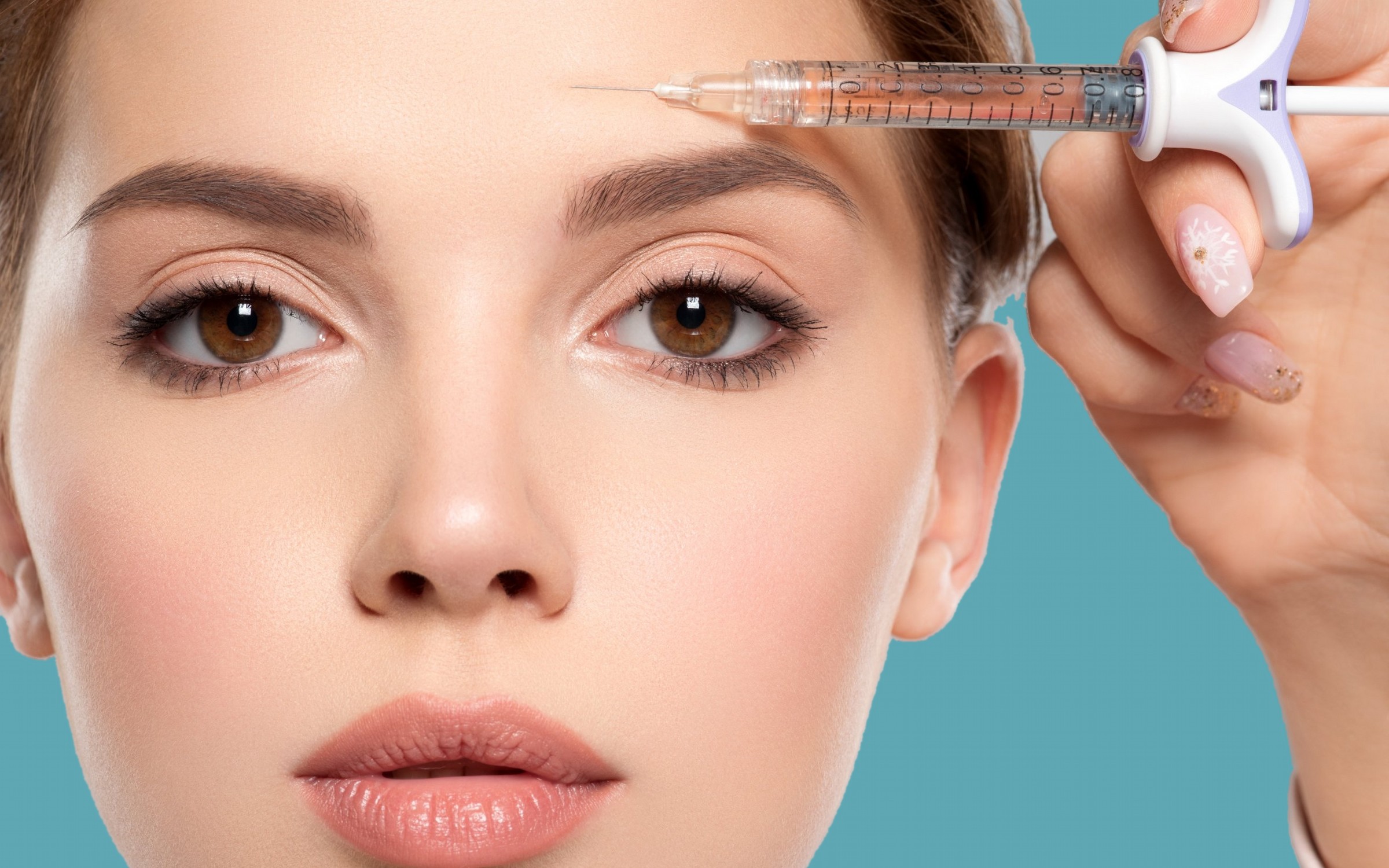
It is a botulinum toxin injection given while lines still appear only with movement. The product relaxes the muscle that causes the line (forehead, frown lines, crow’s feet) without freezing the face. The treatment is the same as standard Botox; what changes is when it is started and the dose, which is lower.
2. From what age?
Botox is ideally started around 30, before lines become etched at rest. Skin matters more than age, though: some very expressive people see a frown line setting in from 25, while others have none at 35.
Before 25, Botox is rarely useful. Before 18, it is not used: the botulinum toxins authorised in France for cosmetic use are approved for adults with moderate to severe lines, and their label advises against use under 18 [4].
3. Does Botox really prevent wrinkles?
The principle is logical: a relaxed muscle creases the skin less. The evidence is still limited, however. The best-known example is a pair of identical twins: the sister treated regularly for 13 years had no forehead or frown lines at rest, unlike her rarely treated sister [1]. Follow-up of the same twins after 19 years pointed the same way [2].
A review of studies in adults under 41 confirms that Botox works on lines at that age, but notes how few good-quality studies look at prevention itself. It also found that younger patients receive fewer units on average and that prevention is their main reason for treatment [3].
4. “Baby Botox”: small doses
Very small doses are enough to relax the muscle while keeping the face expressive: this is the so-called “baby Botox” technique. It suits preventive treatment well, where the aim is not to erase an established line but to slow its appearance.
The result depends on the choice of muscle, injection point and dose: a misplaced point can make an eyebrow or eyelid droop. Dr Victor Médard de Chardon, a former anatomy prosector and former clinical fellow teaching anatomy at the Nice medical school, has performed more than 7,000 Botox injections.
5. Which areas?
Preventive treatment mainly targets the upper face, where expression lines appear first:
- frown lines, between the eyebrows;
- forehead lines;
- crow’s feet, at the corners of the eyes.
These three areas make up the upper third of the face (€420).
6. How often?
The effect appears from day 3, peaks between day 10 and day 15 and lasts 2 to 6 months. To maintain it, a session is advised every 4 months in the first year, then every 6 months: regular sessions extend how long it lasts. For prevention, two sessions a year are often enough. Find out more: Botox units, how long it lasts and how often.
If you stop, the muscles regain their activity within a few months: lines do not come back deeper than before treatment.
7. Risks and contraindications
Side effects are rare and temporary: a mild headache for a few days, slight redness or a small bruise at the injection point, slight asymmetry or a temporary drooping of the eyebrow or eyelid, which settles within a few weeks.
Contraindications are rare: pregnancy, breastfeeding, myasthenia gravis, amyotrophic lateral sclerosis and treatment with aminoglycosides.
Four toxins are authorised in France for cosmetic use: Azzalure, Alluzience, Vistabel and Bocouture. “Botox” is the brand name of Allergan’s toxin, which has become the everyday name for the treatment.
8. Botox does not replace skin protection
Botox acts on expression lines, not on the ageing of the skin itself. Daily sun protection and stopping smoking remain the first ways to prevent wrinkles. For skin that is losing its radiance, other treatments exist, such as skin boosters.
Dr Victor Médard de Chardon performs Botox injections at his practice at 101 rue d’Antibes in Cannes, with no hospital stay, for patients from Cannes, Nice, Antibes and across the Alpes-Maritimes; others travel from Paris, Lyon, Marseille, Bordeaux or Toulouse.
Frequently asked questions
Can I have Botox at 20?
It is rarely useful: at that age, lines usually appear only with movement and disappear at rest. Botulinum toxin is not used for cosmetic purposes before 18.
Is Botox at 25 too early?
Not necessarily: in a very expressive person whose frown line is starting to show at rest, low doses may be justified. Most often, treatment starts around 30.
Does preventive Botox freeze the face?
No, if it is dosed and placed precisely. Very small doses relax the muscle while keeping facial expressions.
Do I have to keep having Botox for life?
No. The effect lasts 2 to 6 months; if you stop, the muscles regain their activity and lines do not come back deeper than before.
How much does preventive Botox cost in Cannes?
From €250 for one area and €420 for the upper third of the face. A touch-up is free in case of imperfection. Cosmetic injections are not reimbursed by French health insurance.
Further reading
- Botox injections
- Botox or hyaluronic acid: what are the differences?
- Botox before and after photos
- Non-surgical mini facelift
References
- Binder WJ. Long-term effects of botulinum toxin type A (Botox) on facial lines: a comparison in identical twins. Arch Facial Plast Surg. 2006;8(6):426-31. doi:10.1001/archfaci.8.6.426
- Rivkin A, Binder WJ. Long-term effects of onabotulinumtoxinA on facial lines: a 19-year experience of identical twins. Dermatol Surg. 2015;41 Suppl 1:S64-6. doi:10.1097/DSS.0000000000000193
- Michon A. Botulinum toxin for cosmetic treatments in young adults: an evidence-based review and survey on current practice among aesthetic practitioners. J Cosmet Dermatol. 2023;22(1):128-39. doi:10.1111/jocd.15513
- Vistabel, summary of product characteristics, sections 4.1 and 4.2. French public medicines database. base-donnees-publique.medicaments.gouv.fr