
Surgery after Wegovy or Mounjaro at a glance
- TimingWeight stable for 6 months
- AreasAbdomen, arms, thighs, breasts, face
- MedicationMust be declared; the anaesthetist decides
- AnaesthesiaGeneral
- LocationClinique Oxford, Cannes
- Price€2,500 to €15,000 depending on the procedure
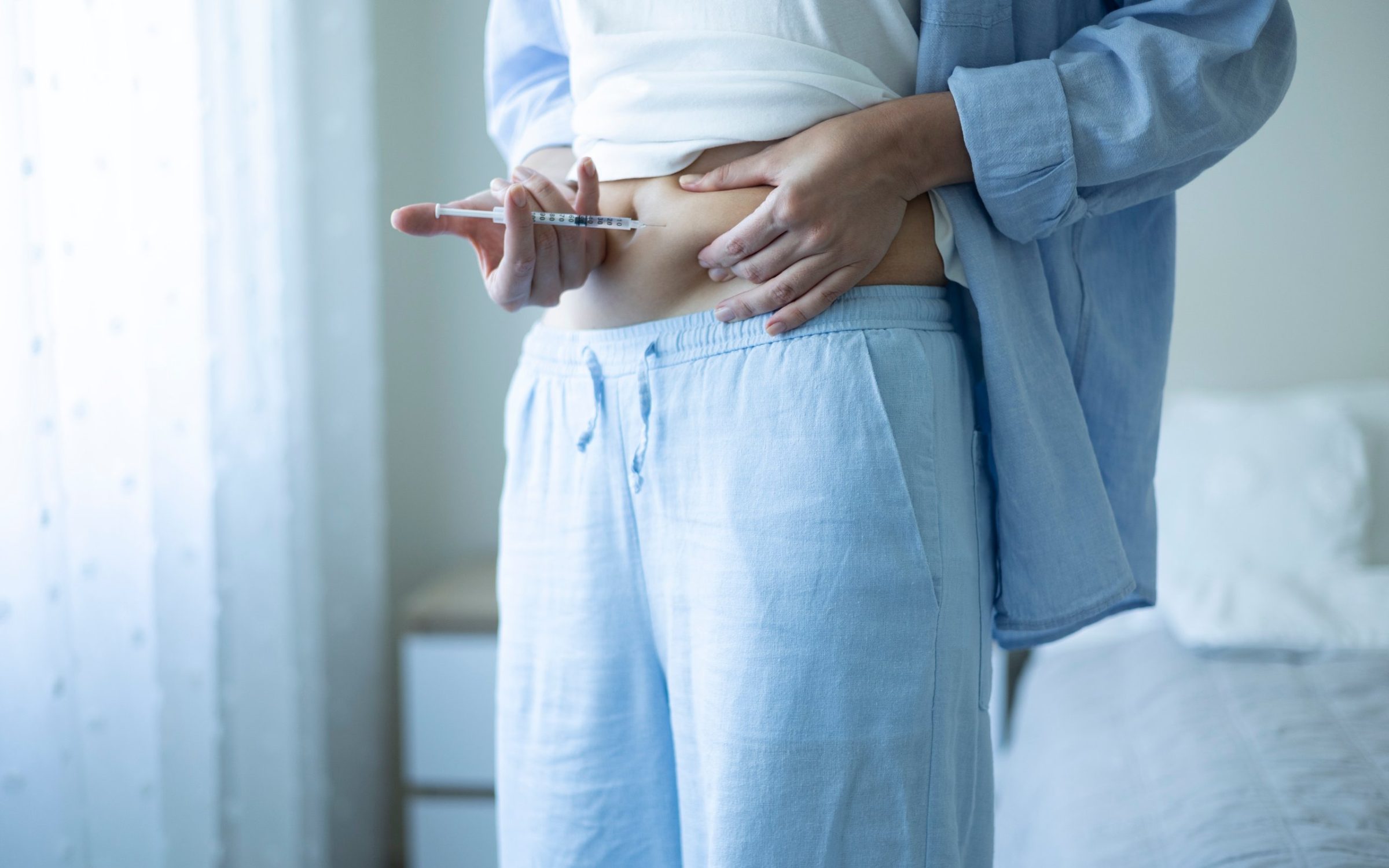
Wegovy, Mounjaro and Ozempic lead to a loss of 15 to 20% of body weight over about a year and a half. The skin does not always follow: the abdomen, arms, thighs, breasts or face can sag. Surgery removes this excess skin, provided you wait until your weight is stable and the anaesthetic is properly prepared.
Price: depending on the procedure, from €2,500 (gynaecomastia) to €15,000 (lower body lift), quoted after consultation (€100).
GLP-1 medicines, semaglutide (Wegovy, Ozempic) and tirzepatide (Mounjaro), reduce appetite and slow the emptying of the stomach. Weight loss is large and fast, and stretched skin does not always shrink back. Dr Victor Médard de Chardon, a plastic surgeon in Cannes, removes this excess skin with the same procedures used after bariatric surgery: tummy tuck, body lift, arm, thigh or breast lift.
1. Why does skin sag after Wegovy or Mounjaro?
In trials, semaglutide 2.4 mg a week led to an average loss of 15% of body weight over 68 weeks [1]; tirzepatide 15 mg, 21% over 72 weeks [2]. For a person weighing 100 kg, that is 15 to 20 kg.
Stretched for years, the skin has lost some of its elastic fibres. When fat melts quickly, the skin does not shrink at the same pace. How much excess skin remains depends on the amount of weight lost, age, skin quality and previous pregnancies: some people are left with almost none, others with an apron of skin on the abdomen or arms that “wobble”. Exercise strengthens muscles but does not tighten skin.
2. When can you have surgery?
Surgery is considered once your weight has been stable for at least 6 months. If weight keeps falling after the operation, the skin loosens again and the result is less good.
With these medicines there is an extra question: will your weight stay stable? One year after stopping semaglutide, two thirds of the weight lost is regained on average [3]. Before scheduling surgery, you therefore need to know, with the doctor who prescribes the treatment, whether it will be continued at a maintenance dose or stopped. If it is to be stopped, it is better to wait until your weight is stable again afterwards.
You can come for a consultation earlier, while you are still losing weight, to review the areas to treat and plan the stages.
3. Should you stop Wegovy or Mounjaro before anaesthesia?
These medicines slow the emptying of the stomach. During anaesthesia, a stomach that is still full carries a risk of its contents flowing back into the lungs. That is why the treatment must always be declared to the surgeon and the anaesthetist.
Recent guidance no longer recommends stopping it routinely [4]. In most cases it is continued, with precautions:
- surgery is postponed during the dose-increase phase, and as long as nausea, vomiting, abdominal pain or constipation persist;
- a liquid-only diet may be requested for the 24 hours before surgery;
- the anaesthetist may check by ultrasound that the stomach is empty before the anaesthetic.
Do not change your treatment on your own: what to do is decided at the anaesthetic consultation, based on your dose, your symptoms and, if you have diabetes, your blood sugar control.
4. Which procedures for which areas?
| Area | Procedure | Scar | Price |
|---|---|---|---|
| Abdomen only | Tummy tuck | Low on the abdomen, within the underwear line, and around the navel | €5,000 to €10,000 |
| Abdomen, hips, buttocks, outer thighs | Lower body lift | Around the waist, within the swimsuit line, and around the navel | €6,000 to €15,000 |
| Arms | Arm lift | Inner arm, from armpit to elbow | €3,500 to €7,500 |
| Inner thighs | Thigh lift | Groin crease and inner thigh | €4,000 to €8,000 |
| Breasts in women | Breast lift | Around the areola, vertical or inverted T | €4,000 to €7,500 (€6,000 to €8,500 with implants or fat grafting) |
| Chest in men | Gynaecomastia | Around the areola, longer if there is excess skin | €2,500 to €5,000 |
When weight loss is moderate and skin quality good, liposuction of the remaining fat deposits is sometimes enough. When excess skin is significant, only a procedure that removes skin gives a good result. Several areas are treated in stages, 3 to 6 months apart, most often starting with the abdomen.
5. What about the face?
Rapid weight loss also hollows the face: cheeks, temples and under-eyes empty, and the skin of the lower face and neck loosens. Depending on the case, Dr Médard de Chardon offers facial fat grafting (reinjection of your own fat), collagen stimulators (Sculptra, Radiesse), hyaluronic acid injections or, when the skin is too loose, a face and neck lift.
6. Preparing well
These medicines reduce appetite, and protein intake is often too low; yet protein is essential for healing [5]. Before surgery:
- recent nutritional and blood tests (protein, iron, vitamins), prescribed at the consultation;
- weight stable for at least 6 months;
- stopping smoking completely at least one month before and one month after surgery;
- the name of the medicine, the dose and the day of the last injection, to give to the surgeon and the anaesthetist.
7. Are the risks higher?
The risks are those of any body contouring surgery: delayed healing, widened scar, haematoma, fluid collection (seroma), infection, deep vein thrombosis. A recent study of 196 lipoabdominoplasties found no more complications or anaesthetic incidents in patients on semaglutide or tirzepatide [6]. It is retrospective and modest in size; caution is still needed, particularly regarding nutrition.
8. Is it covered by insurance?
In France, the rules are the same as after bariatric surgery: French national health insurance may cover part of a tummy tuck when the abdominal apron at least partly covers the pubis, after prior approval; body lifts and arm or thigh lifts may be covered if the criteria are met. Dr Médard de Chardon practises in “secteur 2”, so additional fees remain payable by you or your top-up insurance.
Dr Victor Médard de Chardon, a plastic surgeon in Cannes since 2011, sees patients at his practice at 101 rue d’Antibes from Cannes, Nice, Antibes and across the Alpes-Maritimes; others travel from Paris, Lyon, Marseille, Bordeaux or Toulouse. Operations take place at the Clinique Oxford in Cannes.
Frequently asked questions
How long should I wait after Wegovy or Mounjaro?
Your weight should have been stable for at least 6 months. If the treatment is to be stopped, it is better to wait until your weight is stable again afterwards.
Should I stop the treatment before surgery?
Not routinely. Always declare it: the anaesthetist decides, based on your dose and symptoms, whether it is continued, with a liquid diet the day before, or paused.
Can I continue Wegovy or Mounjaro after surgery?
Yes, if the prescribing doctor considers it useful. A stable weight is the best guarantee that the result will last.
Will exercise get rid of loose skin?
No. It strengthens muscles but does not tighten stretched skin. Only surgery removes excess skin.
What is “Ozempic face”?
It is the hollow, loose-looking face that follows rapid weight loss. It is corrected with fat grafting, collagen stimulators, hyaluronic acid or a facelift, depending on the case. Find out more: “Ozempic face”, restoring volume after weight loss
Further reading
- Plastic surgery after bariatric surgery
- Tummy tuck
- Body lift
- Arm lift
- Thigh lift
- Breast lift
- Preparing for surgery
References
- Wilding JPH, Batterham RL, Calanna S, et al. Once-weekly semaglutide in adults with overweight or obesity (STEP 1). N Engl J Med. 2021;384(11):989-1002. doi:10.1056/NEJMoa2032183
- Jastreboff AM, Aronne LJ, Ahmad NN, et al. Tirzepatide once weekly for the treatment of obesity (SURMOUNT-1). N Engl J Med. 2022;387(3):205-216. doi:10.1056/NEJMoa2206038
- Wilding JPH, Batterham RL, Davies M, et al. Weight regain and cardiometabolic effects after withdrawal of semaglutide: the STEP 1 trial extension. Diabetes Obes Metab. 2022;24(8):1553-1564. doi:10.1111/dom.14725
- Kindel TL, Wang AY, Wadhwa A, et al. Multi-society clinical practice guidance for the safe use of glucagon-like peptide-1 receptor agonists in the perioperative period. Surg Endosc. 2025;39(1):180-183. doi:10.1007/s00464-024-11263-2
- Mehta M, Rometo D, Gusenoff J, Rubin JP. Nutritional challenges in post-massive weight loss body contouring: guidance for plastic surgeons on GLP-1 agonists and sleeve gastrectomy. Plast Reconstr Surg. 2026;158(3):398-413. doi:10.1097/PRS.0000000000012672
- Albanese R, Tomaselli F, Berkane Y, Bertheuil N, Tambasco D. Anesthetic safety and perioperative outcomes in GLP-1 receptor agonist-treated patients undergoing lipoabdominoplasty. Aesthetic Plast Surg. 2026. doi:10.1007/s00266-026-06232-0