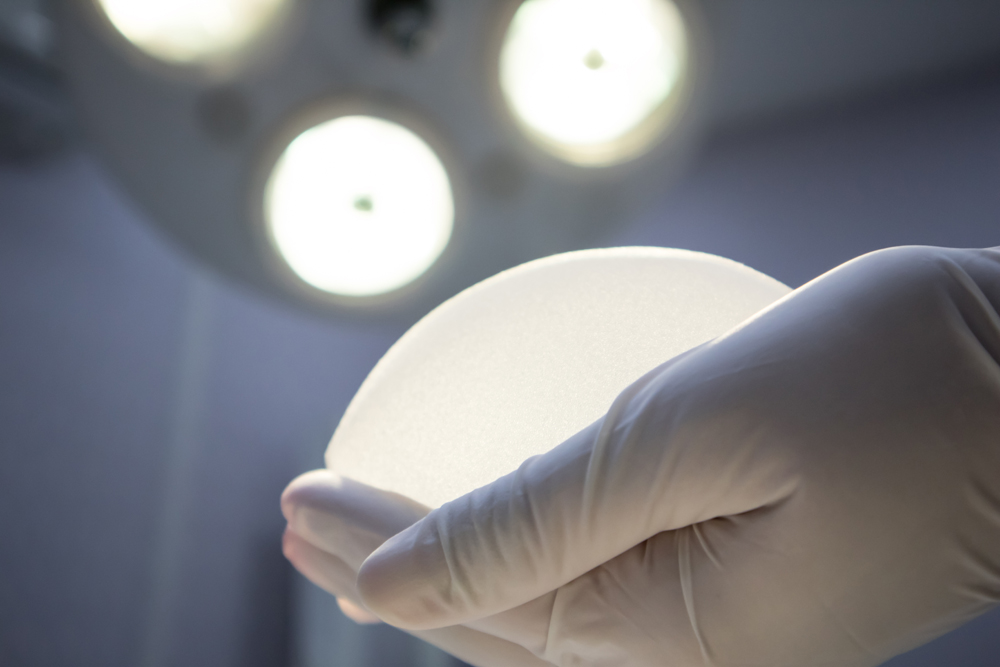

The history of breast implants at a glance
- First silicone implant1962
- Silicone crisis1992
- Return of gel in France2001
- PIP scandal2010
- Ban on macrotextured implants2019
- Capsular contracture in the thesis study< 1%
The first silicone gel breast implant was placed in 1962 by the American surgeons Cronin and Gerow. For thirty years, the main problem was capsular contracture, a tightening of the membrane (capsule) that forms around the implant: thicker shells, more cohesive gel and textured surfaces reduced it. In 1992, the “silicone crisis” led to gel implants being suspended in the United States and in France, until they were authorised again in France in 2001. Since then, the PIP scandal (2010) and the lymphoma associated with implants have led to a ban in France, since 5 April 2019, on macrotextured and polyurethane-coated implants.
Based on Dr Médard de Chardon’s MD thesis on breast augmentation (Nice Faculty of Medicine).
The key milestones
| Year | Milestone |
|---|---|
| 1962 | First silicone gel implant (Cronin and Gerow) |
| 1965 | First inflatable implant (Henri Arion) |
| 1970-1980 | Polyurethane, cohesive gel, textured surfaces |
| 1991 | Polyurethane discontinued in the USA; manufactured again later, notably by Polytech |
| 1992 | Silicone crisis: FDA moratorium |
| 1995-2001 | Silicone gel banned in France |
| 2001 | Return of silicone gel in France |
| 2006 | Return of silicone gel in the USA |
| 2010 | PIP scandal |
| 2011 | First cases of lymphoma (BIA-ALCL) |
| 2019 | Ban on macrotextured and polyurethane implants in France |
The first implants and the problem of capsular contracture
The history of breast augmentation with implants began in the 1960s, with the pre-filled silicone gel implants designed by Cronin and Gerow. They had an anatomical, teardrop shape, and Dacron patches on their back surface prevented them from rotating. Their reputation soon suffered from a high rate of capsular contracture (more than 50%): the membrane that forms around the implant tightens, and the implant becomes abnormally spherical, artificial-looking and even painful in advanced contracture.
As capsular contracture was partly due to silicone bleeding through the shell, linked to the thinness of the shell and the fluidity of the gel, manufacturers developed thicker shells and more cohesive gels. The contracture rate nevertheless remained very high, and anatomical implants were quickly abandoned: contracture distorted anatomical implants as much as round ones.
The return of anatomical implants in reconstruction
In the 1970s and 1980s, breast reconstruction with implants revived interest in the anatomical shape. Round inflatable implants were used, filled with saline, deliberately underfilled so that the volume would settle in the lower part of the breast. The results were disappointing, with a great deal of rippling. The multi-compartment implants that followed had little success, probably combining the drawbacks of both inflatable and gel implants.
Polyurethane and textured surfaces
In the 1980s, polyurethane-coated gel implants became widely used, following publications reporting a sharp fall in the contracture rate (7.4%). Their irregular surface disrupted healing around the implant and the alignment of collagen fibres. Doubts about the breakdown products of polyurethane, potentially carcinogenic in one experimental study, in an unfavourable media climate and in the face of growing lawsuits, led to production being stopped in the United States in 1991. They were later manufactured again, notably by the German manufacturer Polytech, and still are; in France, they have been banned since 2019.
Above all, these implants showed the benefit of rough surfaces over smooth ones in reducing capsular contracture. The combination of a textured surface, a thick multi-layer shell that limits gel bleed, and a cohesive gel clearly reduced the contracture rate. At the end of the 1980s, anatomical gel implants enjoyed renewed interest, first in reconstruction and then in cosmetic surgery.
The silicone crisis (1992-2001)
After the polyurethane crisis, and in an unfavourable media climate, the American Food and Drug Administration (FDA) called in January 1992 for a moratorium on silicone gel implants, which were suspected of promoting cancers and autoimmune diseases; their use was restricted to breast reconstruction, within clinical studies. In France, the Ministry of Health called as early as 1992 for their use to be suspended, in reconstruction as well as in cosmetic surgery, and they were banned from 1995 to 2001. Round and anatomical implants were then filled with saline.
The market for silicone gel implants reopened in France in 2001, after studies had confirmed their safety; the FDA authorised them again in 2006.
How shapes evolved
Anatomical implants were designed to avoid a bulging upper breast, thanks to a gently sloping upper part, and to bring their point of maximum projection closer to the areola and nipple. Several profiles (low, moderate, high, extra-high) then appeared to suit different breasts and chests, by varying the height-to-width ratio and the projection. The characteristics vary from one manufacturer to another: shapes, dimensions, volumes, texture, gel cohesiveness, shell thickness, degree of filling.
The growing number of models was meant to match each body shape more precisely. It also raised questions, which Dr Médard de Chardon’s thesis examined: does the shape of the implant influence the shape of the breast in all patients? Does an anatomical implant keep its shape once in place, and does it give a more natural result? Does a round implant take on an anatomical shape once in place?
The PIP scandal, lymphoma and the 2019 ban
In 2010, the French medicines agency withdrew from the market the implants made by the company Poly Implant Prothèse (PIP), which were filled with a non-compliant silicone gel and ruptured more often. From 2011, cases of a rare lymphoma, BIA-ALCL (breast implant-associated anaplastic large cell lymphoma), were reported, mainly with macrotextured implants. Since 5 April 2019, the ANSM (the French National Agency for Medicines and Health Products Safety) has banned macrotextured and polyurethane-coated implants in France. All about lymphoma and implants · Choosing your breast implants
And today?
The implants placed today are made of cohesive silicone gel, with a smooth, microtextured or nanotextured surface. Dr Médard de Chardon places round or ergonomic implants: the ergonomic implant, a round implant with a softer gel, takes on a teardrop shape when you stand, with no risk of rotation. Since the end of macrotextured implants, anatomical implants rotate much more often, and he no longer recommends them.
In the study carried out for his thesis, the capsular contracture rate after breast augmentation with silicone gel implants was below 1%. The choice of implant depends on the shape of the breasts and chest and on the volume you want. All about breast augmentation · All about capsular contracture
Frequently asked questions
When was the first silicone breast implant placed?
In 1962, in the United States, by the surgeons Thomas Cronin and Frank Gerow.
Were silicone implants banned in France?
Yes. Their use was suspended from 1992 and then banned until 2001; only saline-filled implants were placed during that time. They have been authorised again since 2001.
Which implants are banned in France today?
Since 5 April 2019, macrotextured implants and polyurethane-coated implants, because of a rare risk of lymphoma. Smooth, microtextured and nanotextured implants remain authorised.
Why were implants textured?
To reduce capsular contracture: an irregular surface disrupts healing around the implant and limits its tightening. Macrotextured surfaces were abandoned in 2019 because of lymphoma.
What was the PIP scandal?
The company PIP filled its implants with a non-compliant silicone gel. They were withdrawn from the market in 2010.
References
- MD thesis of Dr Victor Médard de Chardon on breast augmentation, Nice Faculty of Medicine.
- Hammond D. C. Breast augmentation using anatomic implants. Operative Techniques in Plastic and Reconstructive Surgery 7: 125-130, 2000.
- Spear S. L. Breast augmentation with reduced-height anatomic implants: the pros and cons. Clin Plast Surg 28: 561-565, 2001.
- Bricout N. Chirurgie du sein. Springer-Verlag, 1992.
- Muller G. H. Breast implants and silicone: silicone crisis’ history. Ann Chir Plast Esthet 50: 350-356, 2005.
- Glicenstein J. History of augmentation mammaplasty. Ann Chir Plast Esthet 50: 337-349, 2005.
- Hedén P., Jernbeck J., Hober M. Breast augmentation with anatomical cohesive gel implants: the world’s largest current experience. Clin Plast Surg 28: 531-552, 2001.